SANZO JOURNAL · 手工一体拉挺 vs 粘接挺的强度与美感差别、拉挺工艺难度、如何鉴别
The Drawn Stem: The Backbone of a Fine Wine Glass
4 min read
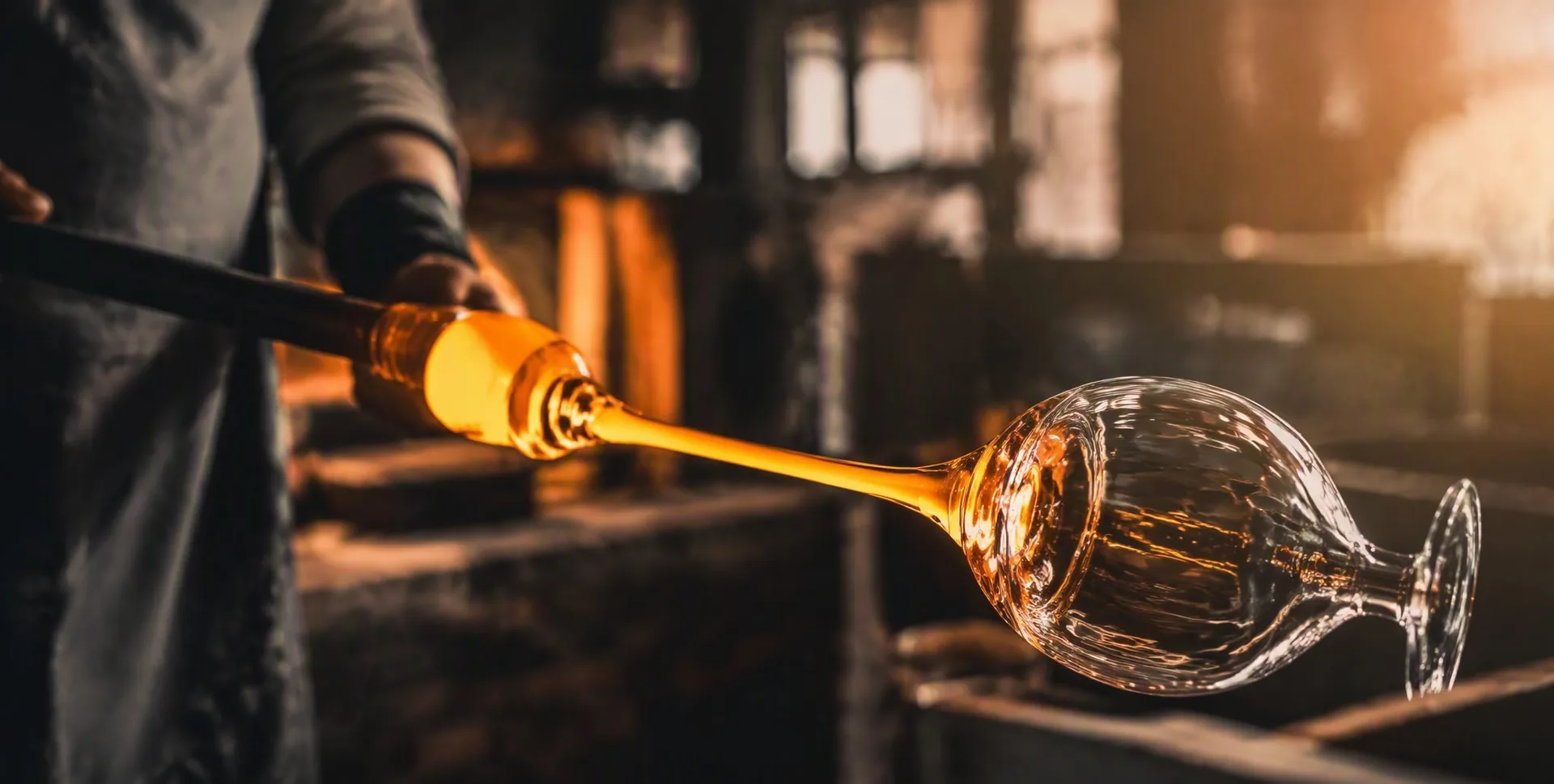
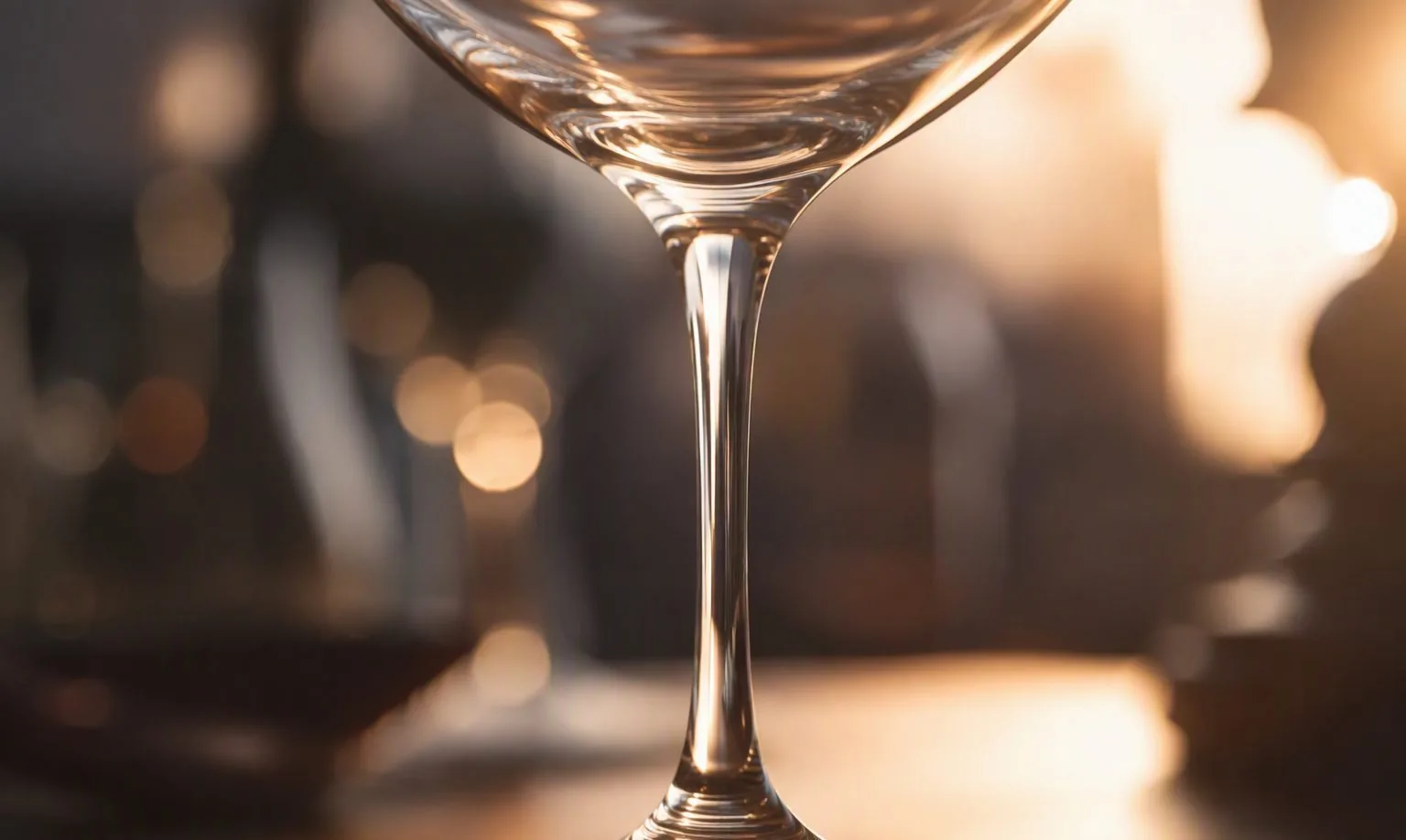
When a wine glass is lifted, the eye follows the curve of the bowl and the fingers settle on the steady base. What truly bears the load is the slender stem between them — barely ten centimeters long. Think of it as the column of a building: invisible to most, yet it decides how long the piece will stand and how many toasts it will survive.
I. One Stem, Two Origins
Wine glass stems are formed in one of two ways: drawn stems and bonded stems. With a drawn stem, the glassblower pulls the stem directly downward while the bowl is still soft, using hand tools — the stem and bowl share the same origin, the same batch of glass, and continuous fiber structure. A bonded stem, by contrast, is made by blowing the bowl and stem separately, then fusing them together under high heat.
That difference in origin is written directly into the lifespan of the glass. A drawn stem has no seam; stress flows naturally along the continuous glass fiber, giving it markedly higher torsional and bending strength than a bonded joint. A bonded stem carries a thermal-history mismatch at the junction — a hidden weak point over time. One too-cold rinse or one slightly hard tap, and the crack often starts right there.
II. Drawing the Stem: A Temperature Gamble in Ten Seconds
Once the glass leaves the furnace, its temperature drops by the second. The artisan must complete three moves — pulling, sizing, and tapering the base — within an impossibly narrow window when the glass is soft enough to shape but not so soft that it collapses. A stem too thick looks clumsy; too thin, and it snaps; off-center, and the balance is ruined. Even a master with fifteen years of experience must re-read the material temperature before every single draw — because every batch of glass has its own subtle viscosity.
The challenge doesn't end there. Drawing the stem is only the beginning. Annealing, cutting, rim-finishing, decorative firing, or ion plating — if the temperature curve of any downstream process is misaligned with the glass's initial stress profile, the stem can fracture mid-production. In other words, a one-piece drawn stem is not the skill of a single workstation; it is the coordination of an entire production chain.
III. How Buyers Can Tell the Difference
- Check the transition: Run your finger along the inner wall of the bowl down to the stem. A drawn stem shows a continuous, smooth curve — no step, no bump. A bonded stem often reveals a faint ridge or excess-glass trace at the joint.
- Hold it to the light: Slowly rotate the stem toward a light source. A one-piece structure refracts light evenly and fluidly. A bonded stem tends to show light-band distortion or tiny bubble clusters at the seam.
- Tap and listen: Flick the middle of the stem with your knuckle. A drawn stem rings clear with a clean decay. A bonded stem, dampened by the joint layer, sounds slightly muted with a shorter sustain.
- Ask about the process chain: Suppliers willing to fully disclose their annealing curves and post-forming steps typically have confidence in their stress control of one-piece structures. Those who are vague are often sidestepping the cost of bonded construction.
IV. SanzoHome's Commitment: One Backbone, Unbroken
That's the weight of this principle. For the backbone to stay straight, the process must never break.
If you're sourcing wine glasses for your brand — or still weighing the trade-offs between drawn and bonded stems — bring us your specific use case. We don't offer generic recommendations. We design solutions tailored to your wine, your table setting, and your budget — solutions that hold up under scrutiny.
one-piece stem wine glasshand-blown wine glassdrawn stem glasswarebonded stem vs drawn stempremium wine glass supplierstemless glassware alternativeQi County glassSanzoHome
Reading this far means you choose suppliers carefully
Tell Xiaozhuo what you have in mind — a few sentences are enough; we handle the rest.
Start a smart inquiry