SANZO JOURNAL · 玻璃器皿出口的包装设计:内衬结构/跌落测试/海运堆叠/防潮,包装也是设计
How We Hold Breakage Below 1%: The Packaging Philosophy Behind Global Glassware Exports
4 min read
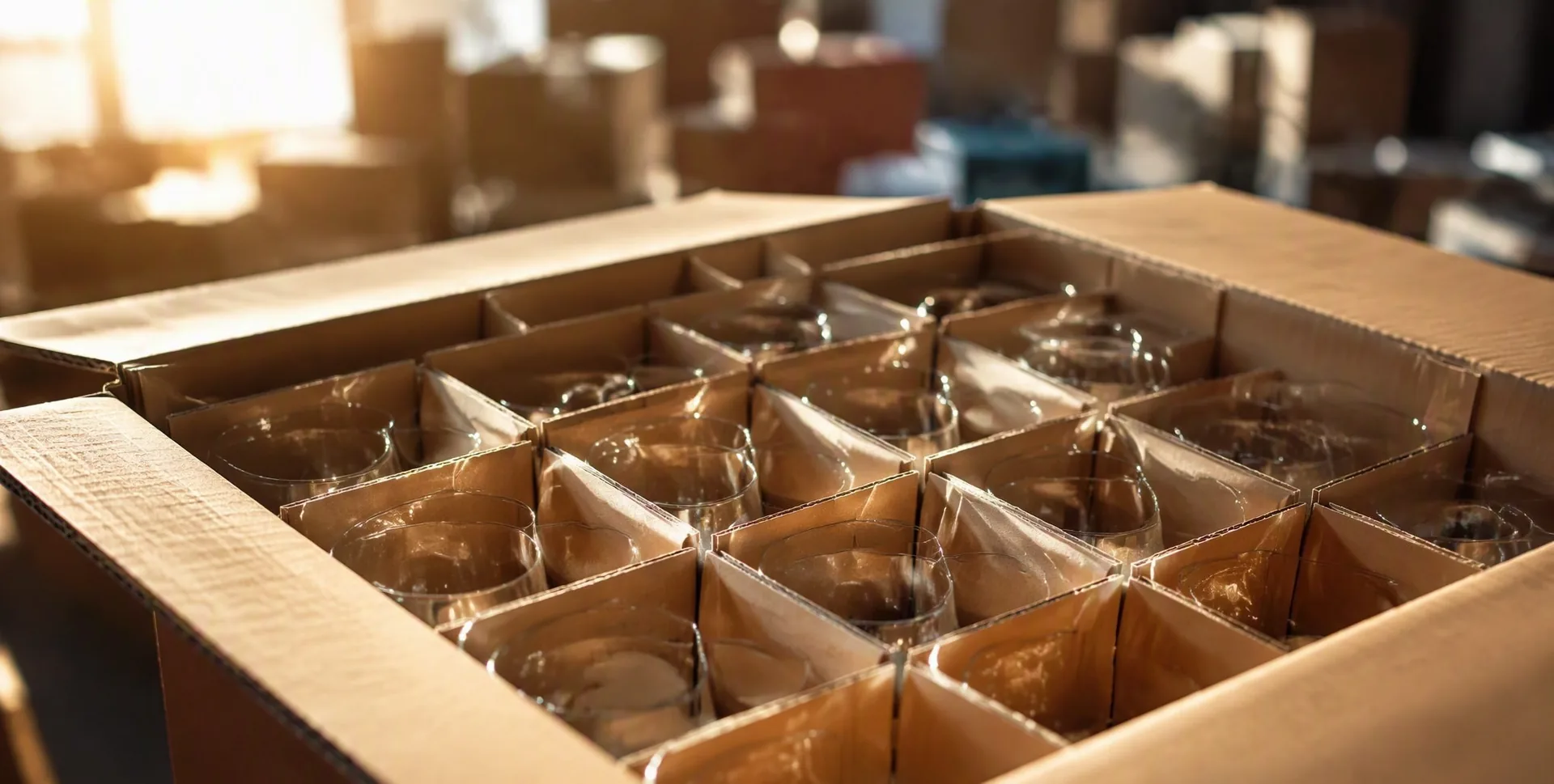
3 a.m. at the Port of Rotterdam. A container has just touched down. A buyer cracks open a carton of stemware from Qixian, Shanxi — 36 pieces, zero breakage. This is no accident. Over the past three years, SanzoHome has shipped glassware to more than 30 countries with ocean-freight breakage consistently held below 1%. The secret lies not in the glass itself, but inside the carton.
Insert Architecture: Letting Every Glass 'Float' Inside the Carton
The real enemy of glassware isn't static load — it's point contact. Even two millimeters of rim-to-rim hardness, repeated over 30 days of transit, will turn into a hairline crack. That's why we engineer a dedicated corrugated insert for every single piece. The rim, bowl, and base are each cradled in precisely scored channels, so the entire shipment is effectively suspended in place. Paper grammage, slot depth, and locking-tab angles all go through a minimum of three prototype rounds before sign-off.
Drop Testing & Ocean-Stack Simulation: Designing for the Worst Case
Before any packaging design is finalized, full cartons must survive a 1.2-meter free-fall drop test — all six faces, four corners, and three edges, ten drops in total. Compression strength is validated for at least five layers of ocean-freight stacking (roughly 2.5 metric tons of pressure) sustained for 24 hours with no deformation. Industry peers often ask: is that overkill? We've run the numbers. A 36-piece carton is worth about $180 in product; add claims handling and replacement freight, and the real loss exceeds $600. Spending an extra $1.50 on packaging buys certainty.

Moisture Defense & Invisible Details: Where Craft Really Shows
- Inner carton walls lined with PE film to block moisture ingress in high-humidity sea conditions, preventing the insert from softening and losing structural integrity
- A sheet of thin tissue paper placed between each glass and its insert — guards against surface scratches while absorbing any trace condensation
- Shipping marks on the outer carton printed with water-based ink, eliminating the smudging and blurring that solvent inks suffer in humid environments
- Closure tape specified for all-weather adhesion: no delamination or cracking from −20 °C to 60 °C
The SanzoHome Standard: Packaging Is Part of the Product
After fifteen years of glassmaking in Qixian, our 156 artisans carry their craft well beyond the blowing bench — into every finishing step. We've come to a clear realization: the moment a customer receives a glass, the packaging is their very first tactile experience. The rigidity of the carton, the precision of the insert, the sense of order when the box is opened — all of it speaks on behalf of the brand. Having exported to more than 30 countries, we've seen too many cases of excellent glassware undermined by poor packaging. That's why SanzoHouse co-locates our packaging engineers and production craftsmen under one roof; every insert structure is calibrated to the center of gravity and wall thickness of its specific glass profile. Packaging isn't a cost line — it's a continuation of design.
If breakage rates in your glassware exports keep you up at night, or you simply want a fresh look at your current packaging strategy, bring us your glass profiles, target markets, and logistics routes. We welcome the most specific questions — the only ones we fear are the ones left unasked.
glassware export packagingcorrugated shipping cartondrop test complianceocean freight stackingmoisture-resistant packagingglass breakage ratecustom pulp insertSanzoHome
Reading this far means you choose suppliers carefully
Tell Xiaozhuo what you have in mind — a few sentences are enough; we handle the rest.
Start a smart inquiry