SANZO JOURNAL · 金箔/气泡灌底工艺的流程、寓意(厚重/尊贵/礼赠)、定制可行性
Gold Leaf Sealed in Glass: Capturing Light at the Base
4 min read
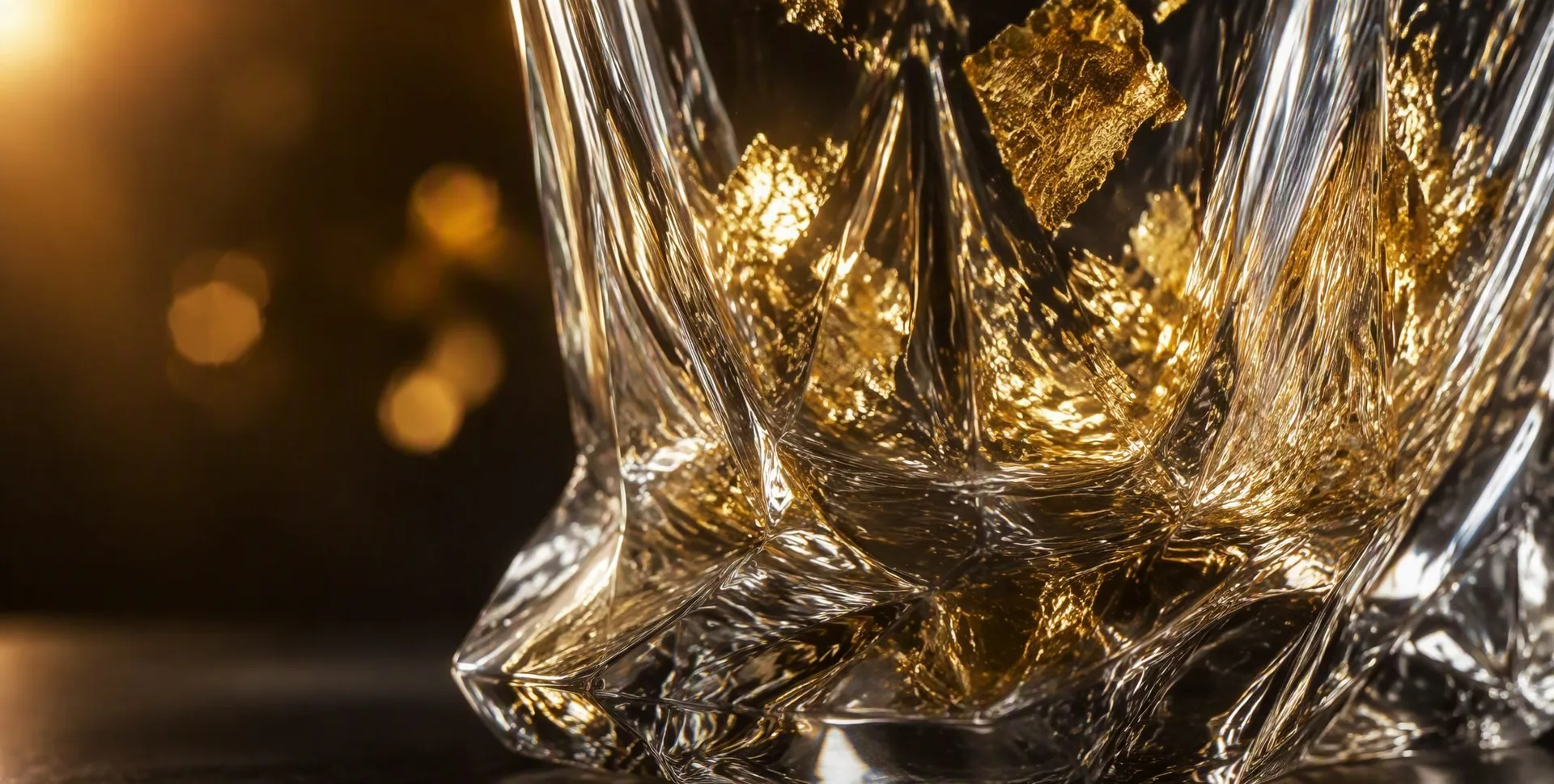
A glass is lifted. Light passes through the wall, pauses at the base—and there it is: a sliver of gold leaf, or a cluster of bubbles held in place on purpose. This is no flaw. It is a deliberate pause the maker leaves for the person holding the glass. This technique—sealing gold leaf into the base during the blow—has been practiced in the hand-blown workshops of Qixian for fifteen years.
Gold at the Base: A Choreography with Time
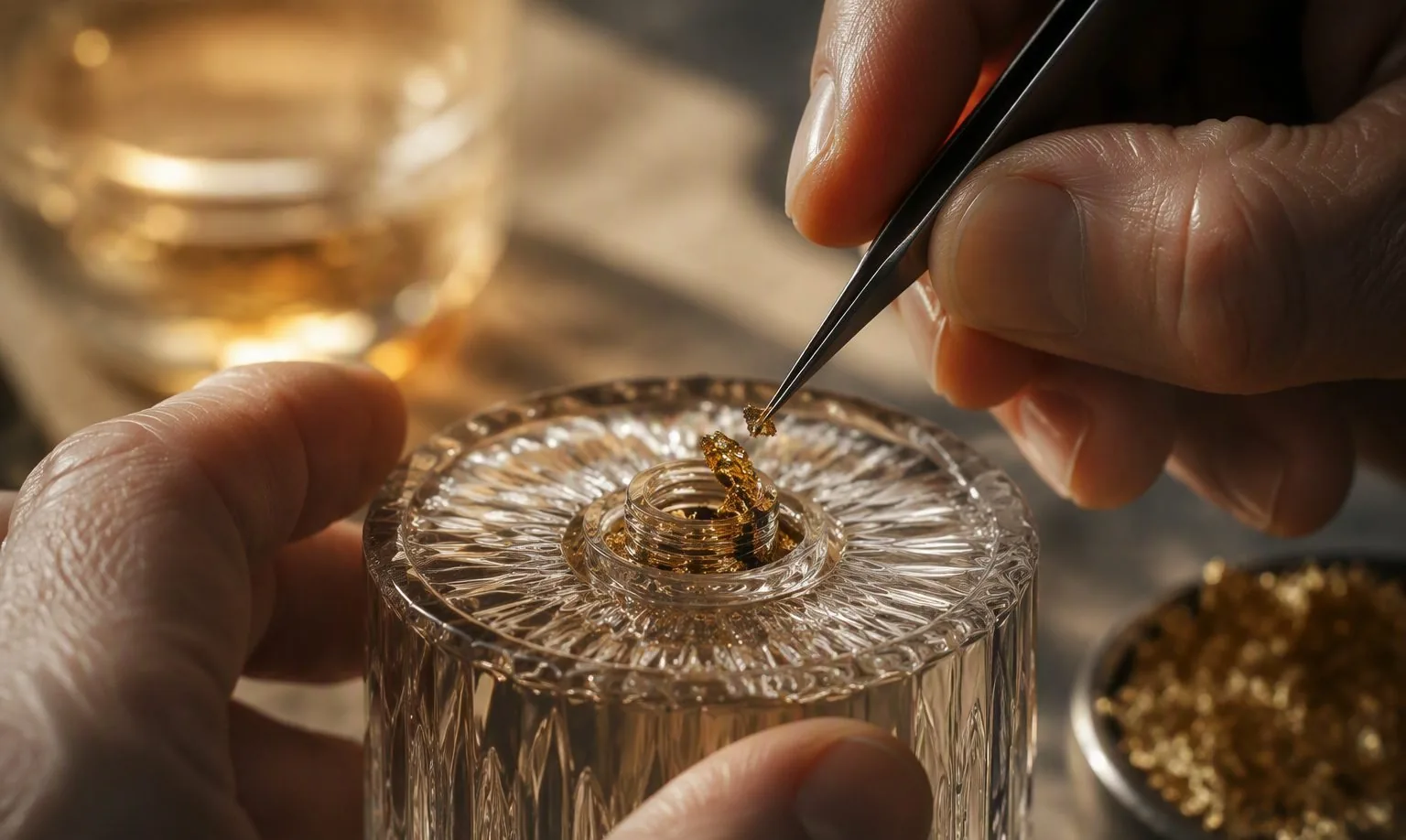
Gold leaf is not an afterthought decoration. It is a mid-process intervention during blowing. When the molten glass gathers at the end of the blowpipe but has not yet taken full shape, the artisan uses long tongs to feed a precisely cut piece of gold leaf into the base position—then continues to blow and shape. The gold does not melt; it is enveloped and sealed within the glass. Its position, its folds, its relationship to surrounding bubbles—all of this is decided in a matter of seconds, guided by feel and judgment.
Retaining bubbles demands equal restraint. Cool the glass too fast and the bubbles vanish. Agitate it too much and they shatter. The craftsman must find the exact density where light lingers—somewhere between 'too many' and 'none at all.'
Why the Base: Meaning and Moment
The base is where the eye finally rests. Gold settled at the bottom carries a sense of 'distillation' and 'treasure'—the drink is finished, but the resonance remains. Bubbles suspended at the base are like a breath frozen in time. These glasses are chosen for whisky tastings, sake gifting, or signature cocktails in fine dining. Their distinction comes not from a logo, but from the feeling that this glass was blown for you alone.
Customization: What You Decide
- Gold leaf form: whole sheet, fragmented pieces, or mixed with other metal foils (silver, copper) to layer the light refraction
- Bubble density: from 'nearly bubble-free' to 'distinctly clustered'—sampled and confirmed, typically offered in three tiers
- Vessel compatibility: gold-in-glass work requires specific base thickness, coordinated with the vessel designer to avoid a base too heavy for comfortable handling
- Post-processing integration: gold-sealed glasses can still receive kiln-fired decals, ion plating, or laser engraving—but the sequence must be planned upfront
The SanzoHome Approach: Keeping the Process Steady in Qixian
SanzoHome is based in Qixian, Shanxi—the heartland of China's hand-blown glass industry. For fifteen years, 156 artisans here have managed the full chain from blowing to post-processing: kiln-fired decals, cutting, frosting, ion plating, screen printing, laser engraving. We export to over 30 countries, and the question we hear again and again is: 'Can you keep the yield on gold-leaf pieces consistent?' The answer: consistency comes not from inspection checkpoints, but from the craftsman's muscle memory of heat and touch—and from a production line where blowing and finishing are never handed off to separate teams. Every glass passes through the same pair of hands, from start to finish.
Bring Your Questions
If you're sourcing a gold-in-glass technique for brand gifting, hospitality programs, or limited-edition collections, bring us your vessel shape, quantity, and timeline. We don't work from a generic catalog. We work as the supplier who answers your specific questions.
gold leaf glasswarehand-blown glassbubble glasscustom drinkwarecorporate giftinghospitality glasswareSanzoHomeQixian glass
Reading this far means you choose suppliers carefully
Tell Xiaozhuo what you have in mind — a few sentences are enough; we handle the rest.
Start a smart inquiry