SANZO JOURNAL · 烤花/丝印/激光雕刻/喷砂/描金/浮雕六种标识工艺的效果、耐久与成本对比
Six Ways to Brand a Glass: A Buyer's Guide to Logo Techniques
4 min read
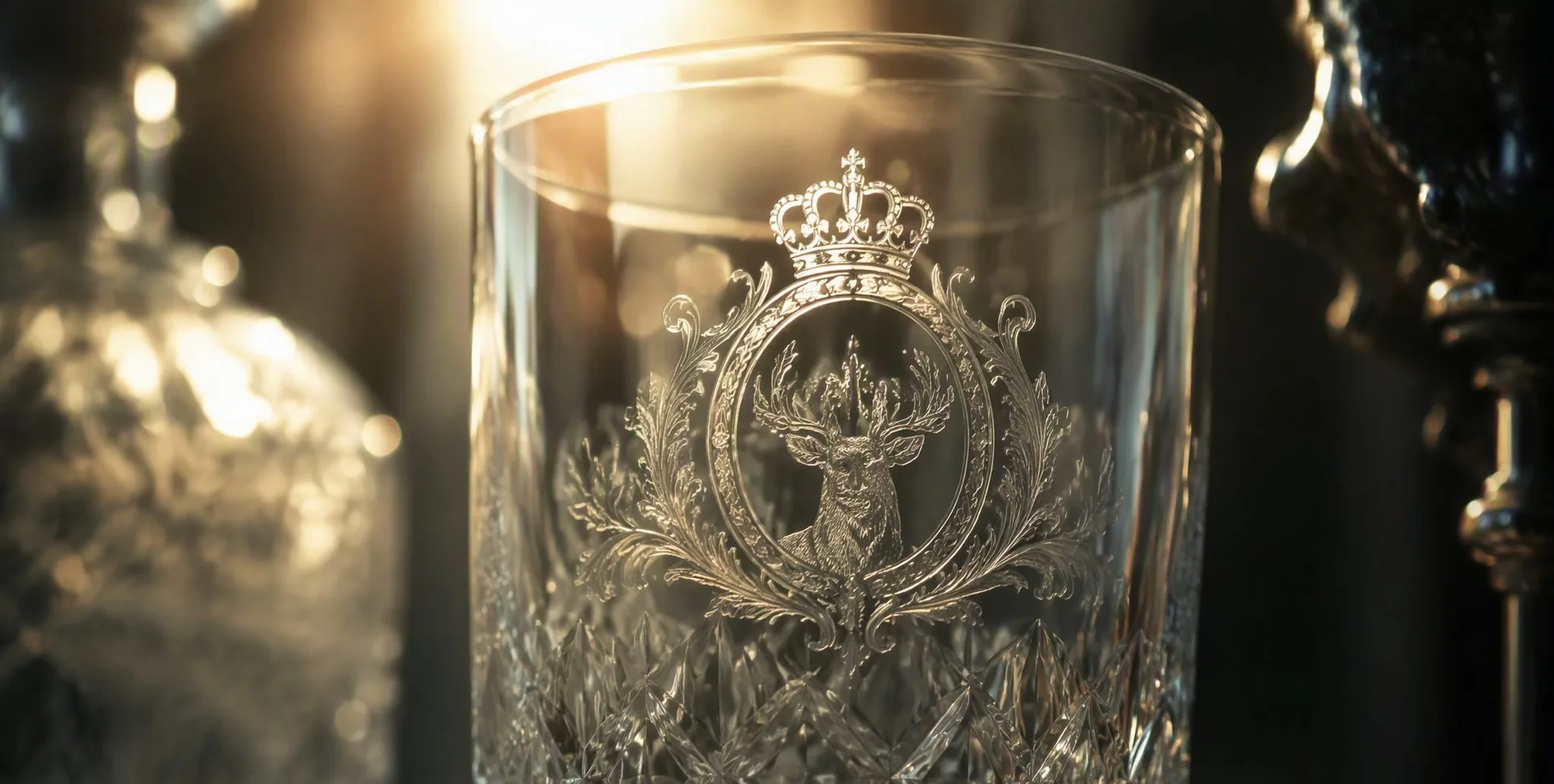
When a glass lands in your hand, the eye goes to one place first: the logo. It might be a gilded line of type, a frosted watermark, or something you can't see at all — until your fingertips catch the faint texture of a laser etch. A logo is more than a brand mark. It is the outcome of a decoration decision. The right technique depends on how long you want it to last, and how you want it to feel.
Six Techniques, Six Personalities
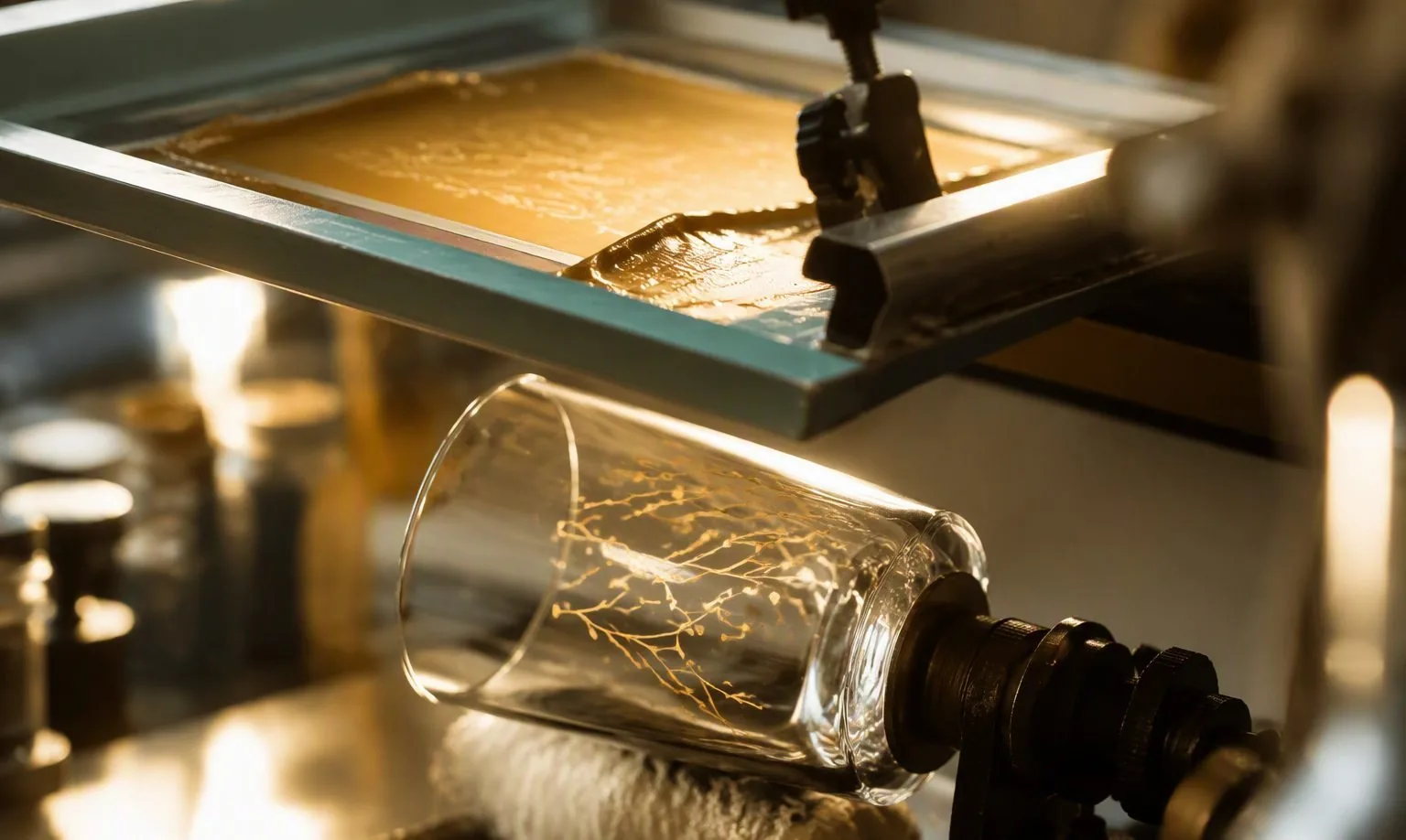
Decal firing fuses ceramic ink into the glass surface at 580–620°C, producing rich, dishwasher-safe color ideal for multi-color logos and gradients at a mid-range price point. Screen printing pushes ink through a mesh for bold, opaque coverage on large solid areas — the most cost-effective option, though less abrasion-resistant than decals. Laser etching removes a micro-layer of glass to create a permanent frosted mark with no ink and zero risk of peeling, perfect for minimalist logos and serial numbers at moderate cost. Sandblasting propels abrasive grit at high pressure to produce a uniform matte zone with a tactile, grainy finish, well suited to full-face logos and gradient transitions, priced similarly to laser work. Gold banding applies liquid gold or gold powder by hand or transfer to the rim or foot, then kiln-fires it to a metallic sheen — the premium option, requiring careful hand maintenance. Embossing raises the logo in relief directly on the mold, so the mark forms as one with the body during blowing, with no secondary finishing needed; it delivers a three-dimensional feel but carries mold tooling costs, making it economical only at high volumes.
How to Choose: Four Decision Points
- Usage context sets the durability bar. Commercial hotel glassware endures three-plus dishwasher cycles daily, so decal firing or laser etching is the go-to. Retail gift boxes can prioritize visual impact with screen printing or gold banding.
- Color complexity determines the process path. Single-color marks work beautifully with laser or sandblast; multi-color gradients and Pantone spot colors require decal firing or screen printing for accurate reproduction.
- Order volume shapes the cost structure. Embossing requires a custom mold — tooling amortizes only at scale, typically 10,000 units and up. For small-batch trial orders, screen printing and laser etching offer the most flexibility.
- Brand identity drives the final call. The warmth of gold banding, the gravitas of embossing, the restraint of laser etching — the technique itself sends a message. Choosing a process is choosing what your brand wants to say.
The Shangzhuo Approach: Let the Craft Serve the Product
Based in Qixian — China's glassware capital — Shangzhuo has spent fifteen years perfecting the craft. Our 156 artisans handle every step in-house, from glassblowing to decal firing, screen printing, sandblasting, ion plating, and laser etching. We export to over 30 countries, serving hotel groups, restaurant chains, retail brands, and independent designers alike. Experience has taught us one thing: there is no best technique, only the right one. When a client sends us a logo file, we start with intended use, move to volume, and finish with the question that matters most — what should this glass communicate? Different answers lead down different paths.
If you're weighing decoration options for your next glassware program, bring us your logo, your use case, and your budget. We don't offer generic recommendations — only grounded, data-driven guidance.
custom branded glasswareglass logo printingscreen printed glasswarelaser etched glasssandblasted glassgold rimmed glasswareembossed glassglassware decoration
Reading this far means you choose suppliers carefully
Tell Xiaozhuo what you have in mind — a few sentences are enough; we handle the rest.
Start a smart inquiry